Mumbai. Delhi. Bangalore. Hyderabad. That is where the premium salons opened. That is where the spending happened. That is where the opportunity was or so most salon owners believed. That story has changed dramatically.
The organised salon sector, which previously held only about 25 percent market share, is rapidly expanding its footprint to capture 35 percent of the market, fuelled by aggressive expansion into tier-2 and tier-3 cities where demand for professional grooming services is surging. And the opportunity has never been more accessible.
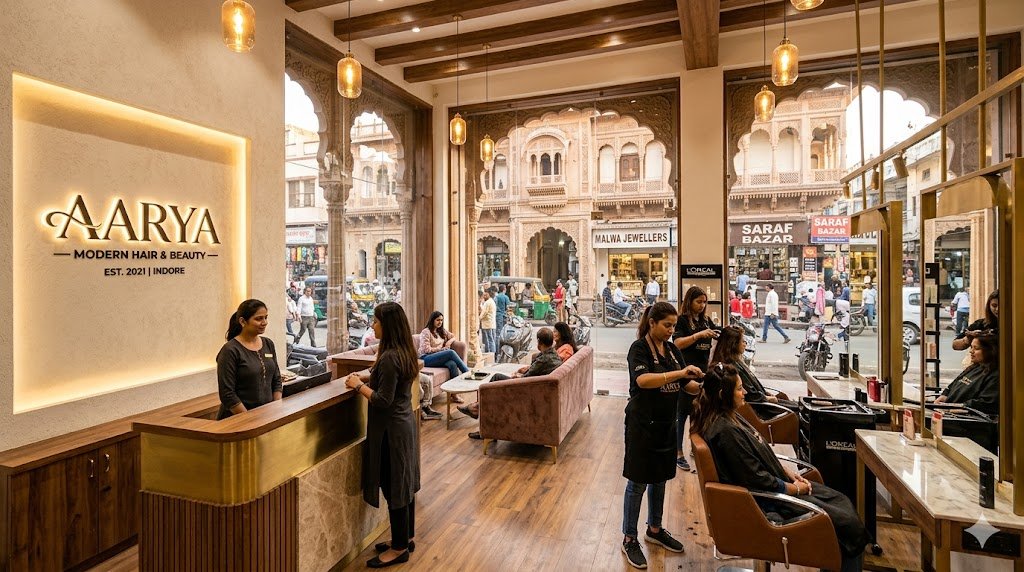
Cities like Jaipur, Indore, Lucknow, Coimbatore, Nagpur, Bhopal, Surat, Vadodara, Mysuru, and Visakhapatnam are not waiting for metros to lead the way anymore. Rising incomes, improving infrastructure, social media exposure to global beauty trends, and a growing appetite for professional grooming have created a ready market one that is still significantly underserved by quality salons.
If you run a salon in a tier-2 or tier-3 city, or you are thinking about opening one this blog is your complete playbook for building a successful, sustainable salon business in India's next wave of growth.
WHY TIER-2 AND TIER-3 CITIES ARE THE SALON OPPORTUNITY OF 2026
Let us start with the numbers because they make a powerful case.
THE DEMAND IS REAL AND GROWING:
With improving infrastructure and digital penetration, lower-tier cities will contribute significantly to the overall growth of the beauty and personal care industry in India. Social media has made beauty trends equally accessible in Nagpur as in Mumbai. A young woman in Coimbatore follows the same Instagram hair colour accounts as her counterpart in Bangalore. She wants the same keratin treatment, the same balayage, the same professional facial and she is willing to pay for quality.
THE COMPETITION IS THIN:
Metro cities have a premium salon on every corner. Tier-2 and tier-3 cities still have a fragmented, largely unorganised salon market. The 36,000 crore Indian beauty care and salon industry is largely unorganised with only around 10,000 crores (28%) forming the organised segment. In smaller cities, this ratio is even more skewed. A professionally run, branded, software-managed salon stands out dramatically against the neighbourhood parlour. You are not just opening a salon you are setting the standard for your city.
THE ECONOMICS ARE BETTER:
This is where tier-2 and tier-3 cities offer a genuine structural advantage. Lower costs mean faster profitability and stronger margins even at slightly lower price points than metro salons. As we covered in Salon Pricing Strategy: How to Price Your Services in India], healthy margins come from understanding and managing your cost structure and tier-2 cities give you a significant cost advantage from day one.
THE LOYALTY IS STRONGER:
Attrition rates in tier-2 and tier-3 locations usually run 10 to 15% lower than in metros and this applies to clients as well as staff. In smaller cities, people are less transient, more community-oriented, and more loyal to local businesses they trust. A client in Indore who finds a great salon stays with it far longer than a client in Mumbai who has 50 alternatives within 2 kilometres.
UNDERSTAND THE TIER-2/3 CLIENT SHE IS DIFFERENT FROM THE METRO CLIENT
Before building your salon strategy, you need to deeply understand who your client is in a tier-2 or tier-3 city because she is meaningfully different from her metro counterpart.
SHE IS DIGITALLY SAVVY BUT VALUE-DRIVEN:
Tier-2 and tier-3 clients are extremely price sensitive and extremely value driven. When there is a higher ticket price, they need to be extremely well-informed. They have disposable income, but they are a lot more particular about how they spend it.
This does not mean she will not spend. It means she needs to feel that every rupee is justified. She has researched you on Instagram before walking in. She has read your Google reviews. She knows what balayage looks like from YouTube. She wants the quality but she will not forgive a price that does not match the experience.
SHE RESPONDS TO TRUST MORE THAN BRAND:
In metros, clients often choose salons based on brand recognition. In smaller cities, word of mouth and community reputation are far more powerful. Your first 20 loyal clients in a tier-2 city are worth more than 200 Instagram followers — because each of them is connected to 50 more potential clients in the same community.
SHE USES WHATSAPP MORE THAN EMAIL:
Communication in smaller Indian cities is overwhelmingly WhatsApp-first. Your booking confirmations, reminders, loyalty messages, and win-back campaigns must all happen on WhatsApp — not email, not apps that require downloads. As we covered in How to Increase Salon Bookings Without Spending on Ads, WhatsApp is your most powerful free marketing channel and it is even more true in tier-2 and tier-3 cities.
SHE VALUES CONVENIENCE HIGHLY:
Parking is easier in smaller cities than metros. But the expectation of professionalism online booking, digital payment, proper invoice is exactly the same. Do not assume that because you are in a smaller city, clients expect less. They expect the same standards they see online and a salon that delivers this is immediately differentiated.
BUILD THE RIGHT BRAND FOR YOUR MARKET
One of the most important decisions you will make is how to position your brand in a tier-2 or tier-3 city.
DO NOT GO TOO PREMIUM TOO FAST:
A ₹5,000 keratin treatment might be mainstream in Mumbai. In Nagpur, it might feel inaccessible to the majority of your target market. Start with a positioning that is clearly above the local parlour professional, clean, tech-enabled but not intimidatingly expensive. As you build your reputation and your client base understands the quality, you can gradually introduce premium services.
DO NOT GO BUDGET EITHER:
The temptation in smaller cities is to compete on price to undercut the local parlour and win on cost. This is a trap. A salon priced at parlour rates attracts parlour clients who will leave the moment someone cheaper opens nearby. Price at the mid-to-premium level for your city. You will attract fewer clients initially but the right clients who value quality and become loyal regulars.
BUILD A RECOGNISABLE LOCAL IDENTITY:
Your brand does not need to look like a metro chain. In fact, it should not. A brand that feels authentically local that knows the local festivals, uses regional references, and feels like it belongs to the community builds faster trust in smaller cities than one that feels imported.
For a complete brand-building framework, refer to our guide: How to Build a Salon Brand from Scratch in India.
NAME YOUR SALON FOR LOCAL RECOGNITION:
Names that are easy to pronounce in the local language, that have a simple regional meaning, or that connect to a local cultural reference perform better in smaller cities than generic English names that feel disconnected from the community.
PRICE YOUR SERVICES FOR THE TIER-2 MARKET
Pricing in a tier-2 or tier-3 city requires specific calibration not just copying metro pricing or local parlour pricing.
THE PRICING FORMULA FOR SMALLER CITIES:
Your prices should be:
- 20 to 40% below equivalent metro pricing reflecting the local income levels and spending comfort
- 30 to 50% above local unorganised parlours reflecting the premium experience and professional service you deliver
COMMUNICATE YOUR VALUE CLEARLY:
In smaller cities, price sensitivity means clients need to understand why your salon costs more than the parlour down the road. Train your team to explain naturally, not defensively what makes the experience different: better products, proper consultation, hygiene standards, trained stylists, digital booking, and a guaranteed result.
USE PACKAGES AND COMBOS:
Packages make pricing feel more accessible by bundling multiple services into a single price that feels like a deal. A ₹1,200 "Hair + Skin Refresh" combo that includes a haircut, face clean-up, and eyebrow threading feels more compelling to a value-conscious tier-2 client than three separate services priced individually.
For a complete pricing framework including cost calculation and tiered pricing, refer to: Salon Pricing Strategy: How to Price Your Services in India.
BUILD YOUR CLIENT BASE FROM ZERO
In a smaller city, you cannot rely on an existing reputation or an established brand name. You are building from zero but the community dynamics of smaller cities actually make this faster than you might expect.
STEP 1: START WITH A SOFT LAUNCH:
Before your official opening, run a 5 to 7 day soft launch — invite 20 to 30 people from your network: family, friends, neighbours, local business owners, schoolteachers, and social influencers. Offer complimentary or heavily discounted services. Focus entirely on delivering a perfect experience.
These 20 to 30 people become your first word-of-mouth engine. In a smaller city, word travels faster and reaches deeper. One happy client who mentions your salon in her kitty party, office, or WhatsApp group is worth more than any Instagram ad.
STEP 2: PARTNER WITH LOCAL COMMUNITIES:
Smaller cities have tight community structures that metros do not:
- Residential welfare associations (RWA)
- Local school and college WhatsApp groups
- Women's self-help groups (SHGs)
- Religious and cultural associations
- Local business networks
Reach out to these groups with a specific offer "Residents of [colony/society name] get 20% off their first visit this month." A mention in the right local WhatsApp group can fill your appointment calendar for a week.
STEP 3: LEVERAGE LOCAL INFLUENCERS:
Forget mega-influencers. In tier-2 and tier-3 cities, micro-influencers local Instagram accounts with 2,000 to 15,000 highly engaged followers carry enormous trust. Offer them a complimentary service in exchange for an honest post. Their audience is local, engaged, and exactly your target client. One authentic post from a trusted local voice generates more bookings than any paid advertisement.
STEP 4: GO TO WHERE YOUR CLIENTS ARE:
In smaller cities, physical presence matters more than in metros. Participate in local events cultural fairs, college fests, women's network events. Set up a simple demonstration booth. Offer free consultations. Hand out appointment cards with a first-visit offer. Getting in front of 200 people at a local event can generate 10 to 20 new bookings in a single day.
MARKET YOUR SALON ONLINE EVEN IN A SMALL CITY
The biggest mistake salon owners in smaller cities make is assuming that digital marketing is for metros only. It is not. In fact, online marketplaces and digital platforms still give you the higher reach in tier-2 and tier-3 cities because digital adoption in these cities is growing faster than physical retail.
GOOGLE BUSINESS PROFILE YOUR #1 PRIORITY:
When someone in your city searches "best salon in [city name]" or "keratin treatment near me" — you need to appear at the top. This costs nothing. Claim your profile, complete every field, add your Skhaira booking link, upload photos of your work every week, and actively collect Google reviews from every satisfied client.
A salon with 150+ Google reviews in a tier-2 city dominates local search — because most competitors have fewer than 20.
INSTAGRAM SPEAK THE LOCAL LANGUAGE:
Your Instagram content should feel local:
- Post transformation photos and tag your city — "#JaipurSalon #JaipurHair #BridalMakeupJaipur"
- Use local festival hooks — posts around Teej, Navratri, Diwali, Ganesh Chaturthi that are specific to your region
- Share behind-the-scenes of local events you participate in
- Repost when local clients tag you
WHATSAPP STATUS YOUR FREE DAILY BROADCAST:
Your WhatsApp Status reaches every client who has your number for free, every day. Post your before-and-after photos, daily slot availability, and weekly offers here. In tier-2 cities where WhatsApp is the primary communication platform, this is one of the most powerful marketing tools you have.
For a complete digital marketing strategy you can implement without spending on ads, refer to: [How to Increase Salon Bookings Without Spending on Ads] and How to Market Your Salon Online in India in 2026.
STAFF YOUR SALON IN A SMALLER CITY
Finding and retaining quality staff is the number one operational challenge for salons in smaller cities. Here is how to address it head-on.
WHERE TO FIND TALENT:
- Local ITI (Industrial Training Institute) beauty and cosmetology programmes a rich source of trained graduates looking for their first professional role
- Beauty academy graduates in your city or nearest large city
- Stylists currently working at unorganised parlours who want a professional environment and better pay
- Referrals from your supplier product brands and distributors often know skilled stylists in the area
HOW TO RETAIN THEM:
Staff in smaller cities tend to be more loyal than metro staff — but they stay for different reasons. They value stability, respect, skill development, and a workplace that treats them professionally.
- Pay on time, every time. This sounds basic — it is foundational.
- Invest in their skills. Send them for brand training. Pay for a short external course. When you invest in a stylist's skills, they feel valued and stay.
- Create a clear career path. Junior to Senior to Creative Director. Show them the road ahead.
- Recognise performance publicly. A "Stylist of the Month" board, a shout-out in the team WhatsApp, a bonus for hitting a target — these cost little and mean a great deal.
For a detailed staff training and retention framework, refer to: How to Train New Salon Staff and Maintain Quality.
THE SMALLER CITY STAFFING ADVANTAGE:
Attrition rates in tier-2 and tier-3 locations usually run 10 to 15% lower than in metros. A stylist who builds a loyal client base in a smaller city is much less likely to leave because her clients are her community. This stability is a competitive advantage that metro salon owners genuinely envy.
BUILD LOYALTY THAT LASTS IN A COMMUNITY-DRIVEN MARKET
In smaller cities, loyalty is not just a business strategy. It is the foundation of survival.
Word of mouth is the dominant marketing channel in tier-2 and tier-3 cities. Every regular client you retain is a walking advertisement. Every client who leaves is a potential negative review in your community's social network.
BUILD PERSONAL RELATIONSHIPS — NOT JUST TRANSACTIONS:
Learn your clients' names. Remember their preferred services. Ask about their lives. In a smaller city, a client who feels that her salon genuinely knows her and cares about her is not going anywhere.
Skhaira's client profile feature stores every detail visit history, preferred stylist, allergies, spending patterns, and notes from previous appointments. Before every visit, your stylist can review the client's profile and walk into the appointment already knowing exactly who she is serving.
RUN A LOYALTY PROGRAMME BUILT FOR SMALLER CITY CLIENTS:
In tier-2 and tier-3 cities, loyalty rewards that feel genuinely generous matter more than in metros. A point system that earns a free head massage or a complimentary eyebrow threading feels meaningful and motivating.
Birthday messages are particularly powerful in smaller cities where people cherish personal recognition. An automatic birthday WhatsApp from your salon "Happy Birthday [Name]! We have a surprise waiting for you this month" — is talked about in kitty parties, forwarded to friends, and remembered for years.
For a complete loyalty programme blueprint, refer to: How to Create a Salon Loyalty Programme That Actually Works.
COLLECT REVIEWS CONSISTENTLY:
In a smaller city, your Google rating is your most powerful marketing asset. A salon with 4.8 stars and 200 reviews in a tier-2 city is essentially the undisputed local leader. Collect reviews from every satisfied client through Skhaira's automated post-visit message — a direct link to your Google review page, sent at the moment of peak client satisfaction.
USE TECHNOLOGY TO RUN LIKE A BIG BRAND ON A SMALLER BUDGET
Here is the single most powerful competitive advantage a salon in a tier-2 or tier-3 city can have:
Run like a premium metro salon at a fraction of the cost.
The technology that powers a salon in Mumbai is the same technology available to a salon in Mysuru. Skhaira does not cost more in a smaller city. It does not work differently. It delivers the same 24/7 online booking, automated WhatsApp reminders, UPI payments, GST invoicing, client profiles, loyalty programme, and analytics — whether you are in Bangalore or Bhopal.
This means a well-run salon in a tier-2 city can offer a client experience that rivals any metro salon — and at prices that make sense for the local market.
WHAT SKHAIRA DOES FOR YOUR TIER-2 SALON:
- Online booking: Clients book 24/7 from Instagram, Google, or WhatsApp — no missed calls during service hours
- Automated WhatsApp reminders: Every appointment confirmed and reminded automatically — no-show rates drop significantly
- Digital payments: UPI, card, and online deposits — no cash handling chaos
- Client profiles: Every client's history, preferences, and loyalty points stored and accessible before every appointment
- Revenue reports: Daily, weekly, and monthly performance — so you know exactly how your salon is growing
- Loyalty programme: Points tracked automatically — clients feel rewarded for every visit
When a first-time client walks into your salon in a tier-2 city and books online, pays via UPI, receives a WhatsApp confirmation, and is greeted by name by a stylist who already knows her preferences — that is an experience she will talk about. Because in her city, no other salon offers anything close to it.
The opportunity in tier-2 and tier-3 cities is not coming. It is here right now, in 2026.
The rapid expansion into tier-2 and tier-3 cities is opening new markets, as growing incomes and aspirations in smaller cities create demand for professional grooming services. And yet, the majority of these markets remain dominated by unorganised, low-quality parlours with no systems, no branding, and no technology.
The salon owner who walks in with a clear brand, professional services, smart pricing, digital booking, and a genuine relationship with her community does not just compete she wins. You do not need a metro budget. You do not need a metro location. You need a metro mindset — the commitment to professionalism, systems, and client experience — in a city that has never seen it before.
That is your advantage. And it is an enormous one.